Robin Goodfellow Robin Goodfellow

Book(s) of the Dead

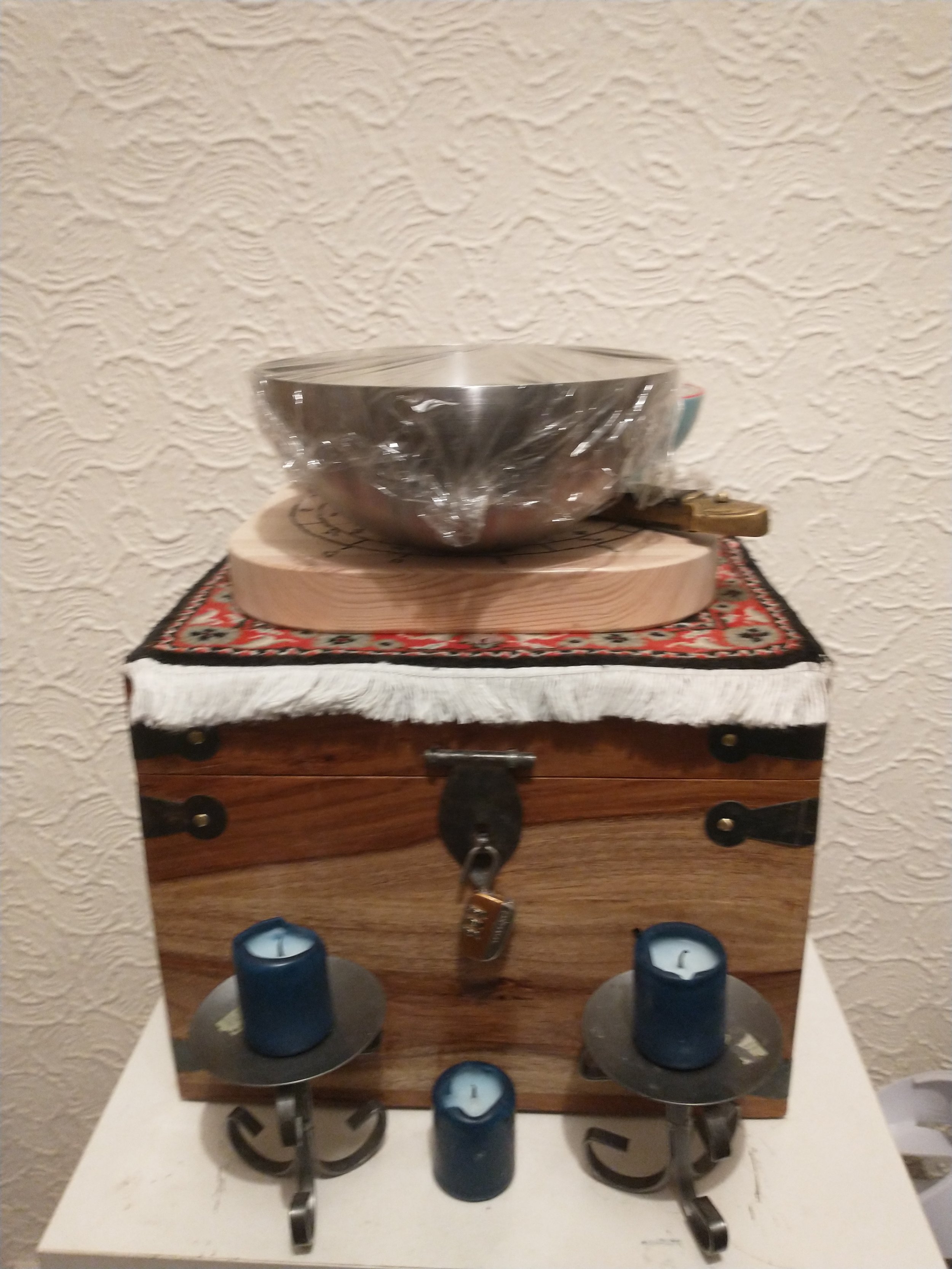
A ring-bound notebook with glued-in pages of a fanciful fantasy text depicting various monsters and described with a made-up script

A few years ago I went to an exhibition at the British Museum about the Egyptian Book of the Dead; you know, the maguffin from the first Mummy Movie?

Well, I was wrong about that. I’d say there were two main takeaways from that exhibition. The first was the the ancient Egyptian afterlife was like the bloody Krypton Factor (or for a slightly less dated reference maybe Fort Boyard or Ninja Warrior) every step of the afterlife seemingly comes with a particular spell or poem or gift that needs to be bestowed to whatever gatekeeper in order to progress. Conveniently, if you were reasonably well off you could purchase a book of the dead to be buried with that would give you a crib sheet to all of these challenges for once you were beyond this mortal coil.

There was never one single Book of the Dead; if anything it seems like a fascinating area of academic study to see how these various documents changed over the years, what parts were added, replaced, edited; seemingly if you were on a budget you might get only a bare bones version and I guess still have to hope you can get by whatever other afterlife perils await on your own.

To look at a book like this, or indeed any book, as a thing in and of itself is only ever half the story. A book, especially one that has passed through multiple sets of hands, eyes and minds, is a reflection of everything that has led to it’s current incarnation. In magical practice this is an aspect of the balance between the craft as passed down artifact versus the craft as a living practice.

When entering an initiatory space, a craft, a practice, one isn’t necessarily receiving a perfect divine text crafted verbatim by divine entities, the same way that those who teach us are not perfect copies of those who taught them. A book, its writer, and the journey it has taken is just as much a thing to study as what is actually written on the pages.

Read More
Robin Goodfellow Robin Goodfellow

What’s Fertility Got To Do With It?

In my youth I spent a lot of time in the company of Morris dancers. From dancing to the rising sun on Mayday, to touring pubs performing the guising play in the run-up to Christmas (raising money for the local hospital) Morris dancers are an eclectic bunch creating a sort of melting pot of folk history, tourist attraction, hobby, exercise, historical reenactment and a tapestry of inherited traditions and imagery, all wrapped in dance, drink and revelry.

I remember one time a somewhat enthusiastic tourist approached my Side’s fool and asked about his ceremonial pigskin (an inflated bladder tied to the end of a stick used for playfully ‘bopping’ people on the head. “Is it true,” she asked, “that these dances originated as a sort of fertility ritual?”

He gave her an abbreviated history of folk traditions, especially around the importance of marking certain points of the year like harvest and Mayday and midwinter and how dancing was historically a key part of these…then he paused and offered her the handle of the pigskin. She took it in her hand and our fool said, “But that's the kind of fertility you were thinking about?”

Bear with me, I'm going somewhere with this!

There can be a bit of a tendency towards over simplification and reductivism when exploring craft, faith, and ritual.

For example, Wicca has sometimes been described as a fertility cult. Whilst it's certainly true that some notions of fertility are in Wicca, it forms only one part of a much wider practice working with nature, the seasons, and cycles of death and rebirth.

It's also important to to get too narrow minded on what we mean when we talk about fertility, especially in a ritual context. Fertility can be looked at as a generative force that can take many forms, as can acts of fertility and fertility worship. This could readily include things like dancing, sowing crops, harvest rituals of sacrifice and giving offerings to the needy. Fertility, I'd argue, can be understood in as broad a sense as life in general.

It's not just about fucking

And as a caveat to that connecting with nature and fertility doesn't have to have anything to do with cis heteronormative perceptions of sex.

It's 2025 how are folks still having to clarify stuff like this?!?

And fertility is only one part of Wicca.

One of the things we love to do with seekers is help them explore a range of potential paths that lie before them. In the UK we're blessed with a rich heritage of different traditions and practices and it's genuinely so exciting to see someone on their path be that one that ultimately lies with us or elsewhere. Maybe someone's path lies with Druidry or ceremonial magic, or traditional witchcraft outside of initiatory Wicca. Maybe they may find themselves ultimately moved towards Catholicism or Zen Buddhism, or Zoroastrianism.y point is simply that no traditions are just one simple thing, nor are they bound to the most reductive possible interpretations of them.

Life is complicated, people are complicated, the least we can do is embrace this

Read More

Robin Goodfellow Robin Goodfellow

Blacksmiths, Brewing and other Magic

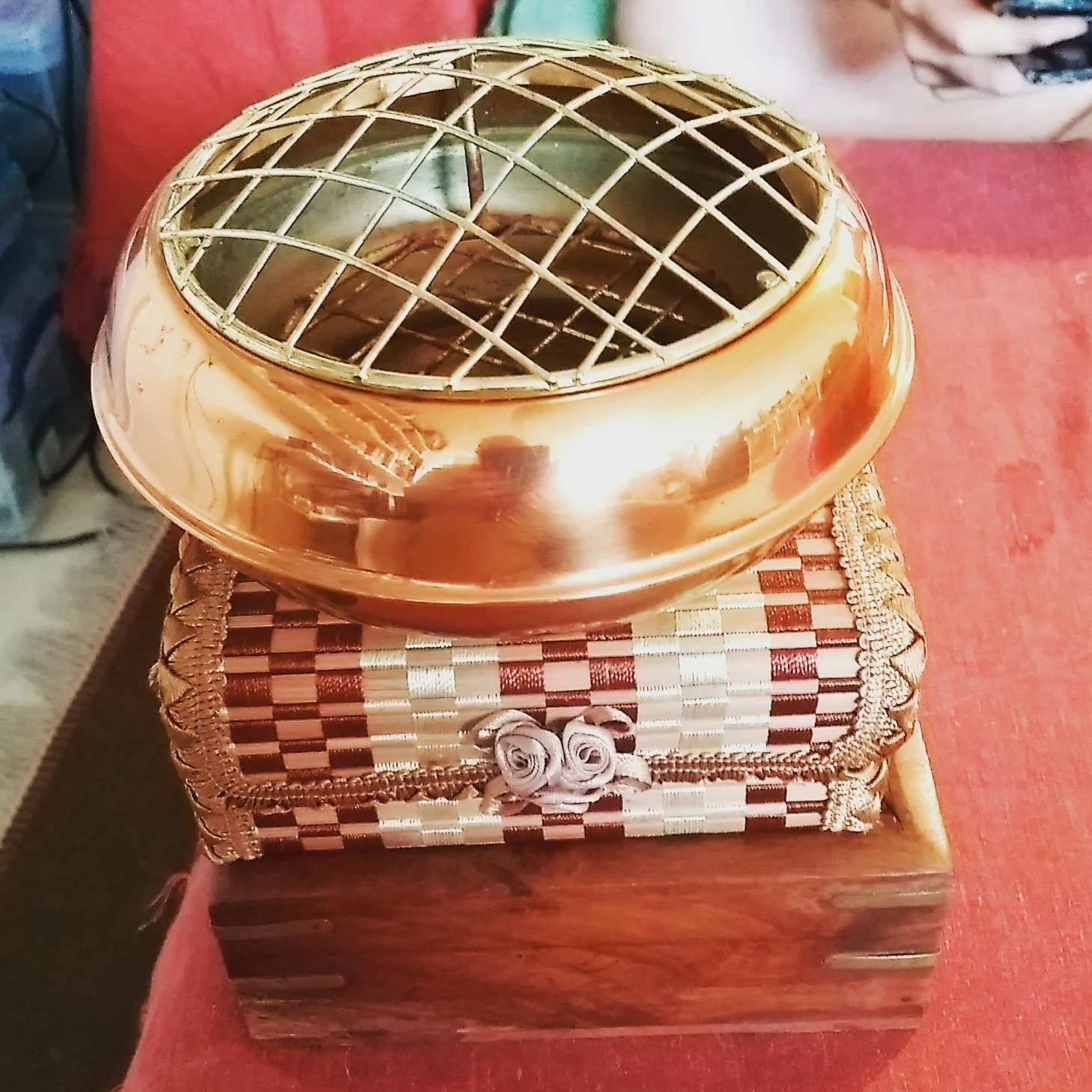
Several demijohns of liquid topped with bubble airlocks for brewing

I remember my first time trying home-brewing. Filling a demijohn with yeast and the weird soup of elderberries I’d gathered in surprisingly lush hidden corners of London. That first evening was fascinating, watching the flurry of tiny bubbles rising up the sides of the jar and knowing that somewhere in there a bunch of microbes were having the absolute time of their lives.
It was hard to imagine people, in centuries past, being able to see this as anything other than an act of magic (whatever actual name they put on it). You do a set of things and then, inexplicably, something tangibly happens and the thing you’ve created changes itself. Of course nowadays we know about the microbial action of yeast that digests sugars into ethanol, and the importance of things like careful sterilisation, the use of phosphates to control the fermentation process and taking density readings to calculate the alcohol content…but is it any less magical?

Does something cease to be magic when we can give it another explanation?

Blacksmithing is a famous historical example of a craft that was considered, if not directly magic, close enough to it that the old legend goes that blacksmiths were the only people who could trade with the devil on an even footing. For centuries blacksmiths likely had little understanding of the crystalline structure and carbon content of steel; but they were nevertheless crafty enough to understand how to use it, the differences in heat treating and quenching that make the difference between a knife that will hold an edge without blunting versus one that will shatter the first time you try to use it.

So what makes the difference between magic and a craft? Is magic something that has to be fundamentally inexplicable? Do you need to have an understanding of the mechanism to make something mundane?

Read More